Gaborone Teen Club: A Teen Leader Shares Her Testimony

November 9, 2009

The following article was written by Kristy Siegfried for PlusNews, an online newsletter of UNAIDS

KatlegoLally

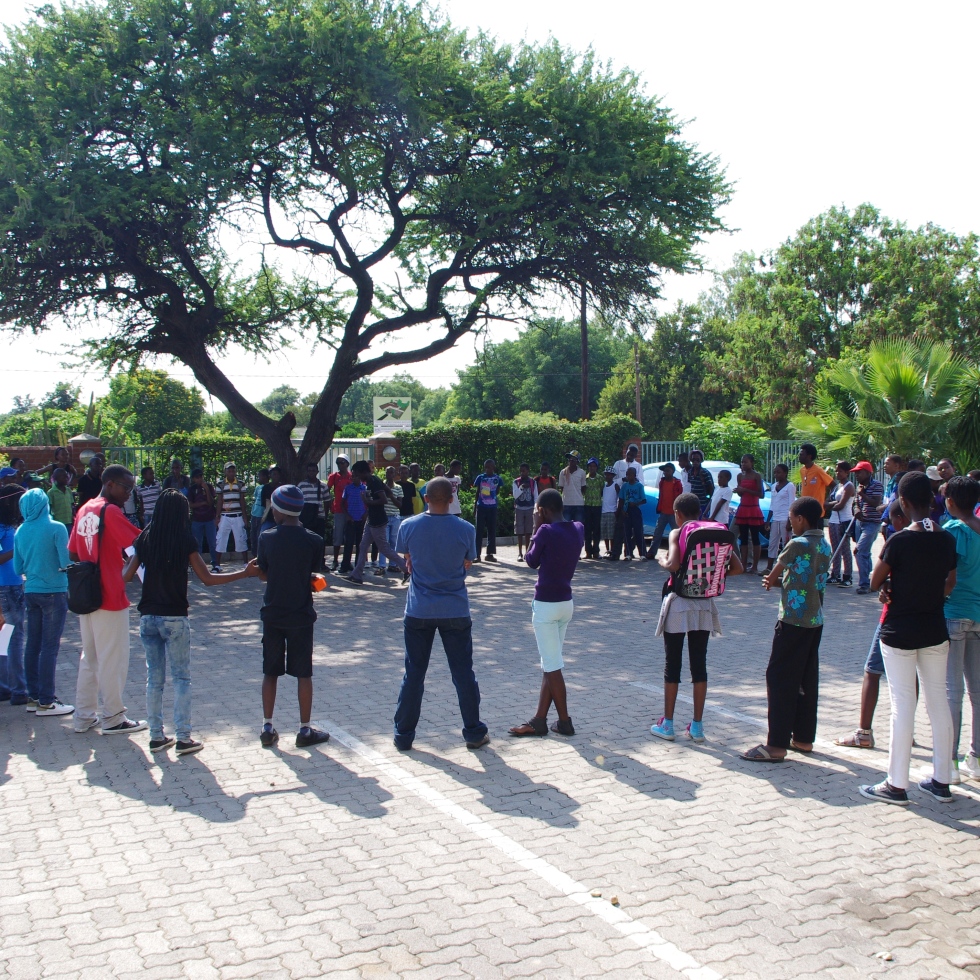
A Gaborone Teen Club member shares her testimony. Photo courtesy of Kristy Siegfried, PlusNews.

GABORONE, 4 November 2009 (PlusNews) – Katlego Lally*, 17, belongs to a club for HIV-positive teenagers run by the Baylor Children’s Clinic Centre of Excellence in Gaborone, Botswana’s capital. She talked to IRIN/PlusNews about how the club has helped her overcome feelings of isolation and depression.

“I was born in 1992. Back then, there was no PMTCT [prevention of mother-to-child transmission] so I got the [HI-]virus from my mother, but I wasn’t diagnosed then. I just grew up falling sick every time, and we didn’t know why.

“In 2003 we did some tests and then they found out that I had the virus, and my mother also. I don’t think I understood at that time … But as time went by I came to understand the disease, and that’s when I told my brain: ‘Okay, this is a death sentence’, and that’s when I became depressed.

“I remember in 2007, I was falling sick often and my exams were about to come, so I was a bit down, always just kicking myself – ‘Why? Why me? What have I done?’ – I was just living in a dark tunnel, waiting for the day I would die.

“Then last year I was referred to Baylor [Children's Clinic] and that’s when I think my life changed. The doctor told me about Teen Club; then I came and I saw a whole new world that I never knew.

“This year I was elected to be a [Teen Club] leader. I have to be a role model to the younger teen members, I help with serving lunch, lead ice-breakers and train other teen leaders from satellite clubs.

“I’ve made a lot of friends – they’re like my family. Everyone is open with each other, because when you’re in the same situation you understand each other.

“Being a teenager is very hard – you have to keep up with the changing life, do what the others do. My school friends don’t know [about being HIV-positive], but just like most people here generally in Botswana, especially teachers when they talk about HIV, they bring it up in a whole negative way.

“I have friends who drink, who have sex, and sometimes you try to tell them: ‘this is not good’. But how are you going to make them understand? You’d maybe have to start by saying, ‘I’m HIV positive and you don’t want to be HIV-positive’, and that would be like, ugh, so I just leave it.

“I want to be a lawyer, but if not law, then radio journalism, and if not, then accounting … or I want to be a movie star.

“I go on dates, but sometimes I can just be out of the dating mode. I want a person I can spend the rest of my life with, but when the time comes for us to maybe have sex, how am I going to disclose my status?

“You never know what they’ll think. What if that person is not that trustworthy? Once you tell him he’ll get really angry and start to spread rumours about you, so I just have to leave it.”

*Not her real name


Francistown Teen Club: A Day of Remembrance and Reflection

November 9, 2009

*For more information about our 2009-2010 Fundraising Drive, please visit our Donations page.*

The following post is courtesy of Agatha Offorjebe, a Princeton-in-Africa Volunteer at the Botswana-Baylor Children’s Clinical Centre of Excellence:

FTownPictureStory

A Francistown Teen Club member working on his "picture story" during a session on grief and bereavement. Photo courtesy of Ed Pettitt.

Francistown Teen Club: A Day of Remembrance and Reflection

On 11th September 2009, after being in Botswana for exactly a month and a half, I finally made my first excursion to Botswana’s second-largest city, Francistown, along with my Baylor Clinic colleagues Ed, Ntobeledzi and Bakani. While I was excited to embark on this new adventure, the circumstances around our trip were quite unfortunate. Three weeks prior to our departure we were informed that Kuda, one the Francistown Teen Club members, had passed away. He had been active in Teen Club, excellent at school and well loved by those who knew him. It was shocking to hear the Teen Club family had lost such a wonderful young man. Given the Francistown Teen Club’s loss, we decided to create a grief and bereavement session for their next Teen Club event. We also planned a memorial service for Kuda.

With the help of two Francistown teens we developed a schedule for the memorial service. I was then tasked to develop the curriculum for the grief and bereavement session. I spent the next two weeks doing an extensive literature review on grief and bereavement in adolescents. After consulting with my colleagues at Baylor, we decided to do a picture-story exercise in which the teens would draw pictures about a traumatizing event or loss such as the death of a loved one, or even disclosure of their HIV status. As we made our way to Francistown, I spent much of the six-hour bus ride (it should have been five hours, but then one of the tires on the bus blew out), thinking about how the teens would receive the activity we had planned for them, especially since the morning of Teen Club would be the first time many of them would find out about Kuda’s death. In addition, Bakani, one of our social workers at Baylor, mentioned that, in the Setswana language, there were no words for grief and bereavement, and that she would have to string together a number of words and phrases in order to explain the concepts.

Friday afternoon quickly turned into the Saturday morning of Teen Club. That morning, my colleagues and I packed up our supplies for the afternoon and made our way to the Light and Courage Centre, where the monthly Francistown Teen Club meetings are held. Upon our arrival we were greeted by some early arrivals and other Teen Club volunteers as we began to unpack and set up our supplies. Soon, most of the teens and volunteers had arrived and we began the icebreakers lead by Kings Foundation volunteers. After this, Bakani and Ntobeledzi explained the purpose of the day’s session, and we broke up into our small groups. With the help of Bakani, and my Teen Leader counterpart, I explained the activity to our group. We asked the teens to first think about a painful or traumatizing event, and then to draw a picture about the time they were happy just before that event. This picture was drawn in the first of nine panels. Next, in the last panel, we asked the teens to draw a picture of the first time they were happy after the traumatizing event or loss. We then asked the teens to draw the actual traumatizing event in the middle panel. From there, they were asked to fill in the gaps in the remaining panels, drawing pictures of events leading up to the traumatizing event or loss, and pictures of the moments after it.

Bakani and I walked around as our group members completed the activity. Some moved rapidly from panel to panel, while others labored over each drawing. At the end of the activity we asked if anyone wanted to present his or her comic. After a couple of volunteers took their turn the group began to prepare poems, drawings, and letters that were going to be used during the memorial service for Kuda. At this time Bakani took notice of one of my teens and pulled him aside. This teen had been taking the activity very seriously, and it seemed he had wanted to speak up during the presentation time but was a little unsure. Bakani took him aside asked if he wanted to present his story to her. After he told Bakani the story in his picture comic, he spoke more openly about the other loses he had experienced in this life. Bakani spoke to him briefly and he returned to the group seemingly more at peace and ready to carry on with the next activity.

The teens completed their messages for Kuda’s memory box and the memorial service went on as planned. It was touching, and a bit tearful, as the teens talked about the friend they had lost and lit candles in his name. I was so moved by the sorrow I saw in the teens, that I have to admit I nearly shed a few tears that afternoon, even though I had never met Kuda. After the memorial service we had lunch, said our good-byes, and made our way back to the hotel.

The ride home was a long one, full of deep thought and reflection, as I recalled the Teen Club activities of the previous afternoon. While I felt that the activity we had done was a difficult one, I believed it was important in allowing the teens to begin to process the events they had experienced. In all, I was touched by the candor and sincerity of these teens, most of whom I had never met before. But, more than anything, I was humbled by the lessons of courage they had taught me that warm Saturday afternoon.


Francistown Teen Club: A Memorial for Kuda

November 9, 2009

*For more information about our 2009-2010 Fundraising Drive, please visit our Donations page.*

The following post is courtesy of Melanie Quinn, an Adult Volunteer at Francistown Teen Club:

KudaMemorial

A memorial service for Kuda. Photo courtesy of Ed Pettitt.


Francistown Teen Club: A Memorial Service for Kuda

In early September, I received a call from the coordinator of Teen Club telling me that one of our Teen Club members had passed. He was not certain of the name; some of the kids use a couple of different names so I was not sure which young man it was. Of course all of our teens are very special.

I worried about our teens; after all, one of our goals for Teen Club is to empower each other to live positively and with hope. We discuss adhering to a good lifestyle and taking their medications regularly, especially their ARVs. These teens are warriors and they work hard to develop their life skills. So, how were they going to take this sudden passing of their peer and fellow Teen Club member?

When I arrived at the Light and Courage Centre on Saturday morning, 12th September, my heart sunk when I realized it was our Kuda. Naturally, I would have felt the same for any child. But Kuda was a very popular sweet young man. When we first met him, many of us were shocked that he was 15. He was very small. As soon as he spoke, you understood this was no young child. Always smiling, often laughing, and always encouraging. With his small stature, we wanted to protect him, but he seemed fine and confident without us. The last time I saw him, though, he was really quite ill but still managed to smile. He had slowed down, but was still encouraging his fellow Teen Club members.

We spent the morning in preparation for Kuda’s memorial service. We broke into small groups and discussed tragedies and sorrows and how we dealt with them. My heart felt like bursting at how really personal and intimate the kids had gotten with us. The teens prepared poems, drawings and letters for Kuda. They fashioned a memory box and put their works inside. We lit candles and prayed. One young lady shared how, upon transferring to a new school, Kuda took it upon himself to make her feel comfortable and at ease. There were a few tears, and everyone was very quiet. I was a bit weepy, but also impressed by the teens. We adults could see they were deeply saddened, but they also wanted to ensure a worthy service for Kuda.

No matter what I think I can possibly bring to Teen Club, I am constantly humbled by what these teens teach me. Continuously, despite their HIV status and their day-to-day struggles, each teen wraps me in an awareness of the importance of today. I am so grateful for Kuda and the other Teen Club members for the lessons they have taught me. Rest in peace, Kuda, robala ka kagiso…


Botswana Teen Club in the News!

November 4, 2009
plusnews

PlusNews is the global online HIV and AIDS news service of the United Nations Integrated Regional Information Networks (IRIN).

Dear Friends of Botswana Teen Club,

Please click on the following link to read an excellent article about the Botswana COE and Teen Club programme that was recently published in PlusNews, an online newsletter sponsored by UNAIDS: http://www.plusnews.org/Report.aspx?ReportId=86861 . The reporter was in attendance at our Make a Difference Day event last Saturday and used pseudonyms for the teens she interviewed in order to preserve confidentiality. In case you were wondering, the photo attached to the report is a stock photo and not a photo of our teens.

Feel free to pass this on to others and spread the word about the great work that is being done by Botswana Teen Club!

Here is the article in its entirety:

GABORONE, 3 November 2009 (PlusNews) – Raging hormones, peer pressure and coming to terms with a changing body image – growing up is difficult enough without the added burden of living with HIV, and keeping it hidden from friends and classmates.

“Being a teenager is very hard; you have to keep up with the changing life, do what the others do,” agreed Katlego Lally*, 17, in Botswana’s capital, Gaborone, who was born with HIV but only learned of her status six years ago. “My school friends don’t know; if you bring up HIV they’re quite ignorant.”

As one of the first countries in southern Africa to start rolling out a national antiretroviral (ARV) treatment programme that now reaches nearly 100 percent of those who need the medication, Botswana has a rapidly growing population of children infected at birth who are surviving into adolescence.

Simply referring these teenagers to adult clinics and ignoring their special needs could lead to a reversal in the gains Botswana has made in combating HIV, argues Ed Pettitt, coordinator of the Teen Club programme at the Botswana-Baylor Children’s Clinic Centre of Excellence in Gaborone.

“Adolescence, as a period of development, has the highest risk for therapeutic failure – not just for ARVs, but any medication for a chronic illness,” he told IRIN/PlusNews.

“I call it the ‘inconvenient truth’ of paediatric HIV – it’s great that you can put children on ARVs, but you have to realize that one day they’re going to grow up and become teenagers, and all the challenges and headaches that come with adolescence are going to impact on their behaviours.”

Julia Rosebush, a doctor at the Children’s Clinic, which provides care and treatment to HIV-infected infants and children through a partnership between the Baylor International Pediatric AIDS Initiative and the Botswana government, has already seen how teenage rebellion can translate into treatment failure. “A lot of kids throw away their pills – we’re finding a lot who are failing first-line treatment already.”

Pettitt said only three lines of drugs for treating HIV were available in Botswana, and if interrupted treatment caused resistance to these to develop during adolescence, “your long-term prognosis doesn’t look good”.

A whole new world

The first Teen Club started in Gaborone in 2005 with just 23 teenagers, but now has over 400; that number is expected to reach over 1,000 by 2012, and five satellite clubs have launched in other parts of the country.

Clinic staff and some of the older teenagers who serve as “teen leaders” run monthly events at the clubs, providing support and sanctuary to the vast majority of members who have never disclosed their status to anyone besides their caregivers.

“When there’s only one other person that knows their status, they’re leading kind of double lives,” said Pettitt. “They can’t even tell their best friend because they fear that friend will tell others, and they’ll never be able to go back to school.”

For Lally, who started coming to Teen Club last year, realizing that there were other teenagers like her was life changing. “I was just living in a dark tunnel, waiting for the day I would die,” she said. “The doctor I was seeing told me about Teen Club and I saw a whole new world … I thought it was just me, but I saw a whole lot of excited and happy teenagers.”

She is now a teen leader and thinks of her friends at the club as “like my family”. “Everyone is open with each other, because when you’re in the same situation you understand each other,” she said. Mostly they talk about “normal teen stuff” rather than their HIV status.

The monthly events are usually focused on fun and general life skills rather than HIV-related issues. Past activities have included pool parties, salsa classes and movie nights, although the most recent event focused on how to disclose one’s status to friends and family.

After a panel discussion in which several adults and one teen leader shared their experiences of disclosure, the teenagers broke into small groups to act out skits where they practised disclosing to best friends, girlfriends, teachers and cousins.

Sexuality and relationships are particularly fraught for HIV-positive teenagers, but giving them tools for disclosing to romantic partners is vital if they are to use prevention methods, said Pettitt.

Mpho Mosala*, 17, another teen leader at the Gaborone Teen Club, has been dating the same girl at his school for the past two years but he has yet to tell her of his status. “Right now, I don’t think it’s so important because we’re not doing anything that would expose her,” he said. Lally has decided to stay “out of the dating mode”, at least until she finishes school.

While younger club members attended the session on disclosure, older teenagers were busy clearing undergrowth from a plot across the street where a drop-in centre for HIV-positive adolescents is to be built. They were joined by volunteers from Barclays Bank, which contributes part of the funding for the programme as well as financial literacy training to the teenagers.

The centre will provide a much needed place where teenagers and their caregivers can come between clinic appointments and monthly events for counselling, training and sports, or just to hang out.

Model programme

The success of Botswana’s ARV programme and its prevention of mother-to-child transmission (PMTCT) programme means that while the number of infants born with HIV is dwindling, the number of HIV-positive adolescents is growing every year. “In three or four years we’ll pretty much be an adolescent clinic,” said Pettitt.

Recognizing the growing need, Botswana’s Ministry of Health is partnering with Baylor to develop an adolescent care package to train health care workers at government ARV clinics in how to cater for teenage patients.

While Botswana is slightly ahead of the curve, other countries in the region are also dealing with growing numbers of HIV-positive adolescents and looking for models they can adapt.

Pettitt welcomes the interest, saying: “A lot more attention and resources needs to be put towards finding ways to keep adolescents adherent and prevent them from infecting others.”

*Not their real names


Gaborone Teen Club: It Takes Two to Tango

September 9, 2009

*For more information about our 2009-2010 Fundraising Drive, please visit our Donations page.*

The following post is courtesy of Dr. Leah Scherzer, an Adult Volunteer at Gaborone Teen Club:

Gaborone Teen Club members at a Latin and Hip-Hop dancing session.  Photo courtesy of Leigh Howard.

Gaborone Teen Club members at a Latin and Hip-Hop dancing session. Photo courtesy of Leigh Howard.

Gaborone Teen Club: It Takes Two to Tango

Today was my first Teen Club and it rocked! Teen Club is a chance for HIV-positive teens ages 13-19 to get together each month. There are now Teen Clubs in four cities/towns in Botswana. The largest one is here in Gaborone with around 300 teens registered. On the average month about 120 show up! Since we have such a large group, the teens are divided into younger (13-15) and older (16-19) groups. This month the older teens got to learn Latin and Hip-Hop dancing, while the younger group had a session on “love, sex, and dating.” (Each month one of the groups does a “life skills” session, while the other group does a fun activity and the following month the groups switch).

The day began at 8:30am, as we gathered in the clinic parking lot for icebreakers. The fact that 120+ teenagers are willing to wake up early enough to be somewhere at 8:30 on a Saturday morning shows just how much Teen Club means to them (especially since some travel pretty far distances). The icebreakers were led by the excellent cadre of Teen Leaders (teens who have been elected to help to facilitate Teen Club, they also help with planning the activities, and many were counselors at Camp Hope this year. After the icebreakers the groups split up, with the older group going to a local school to learn Latin and Hip-Hop dancing and the younger group staying at the clinic.

I was one of the small group facilitators for the younger group. After an introduction, by the Teen Leaders, we split off into 6 small groups. I had a group of 11 (4 boys and 7 girls) and a Teen Leader as co-facilitator. Thank god for my Teen Leader, who was awesome! Many of the teens have a hard time understanding complex concepts in English and feel more comfortable speaking about tough issues in Setswana. So she was invaluable at leading the group and bridging the language divide. The activity was very well planned out and we facilitators had guides to help us lead the session. We began with a map of the city and had the teens point out areas in the city where boys and girls meet. We talked about what kinds of activities teens do in these areas and which ones were healthy or unhealthy. In a country where billboards proclaim “Who’s in your sexual network?” and where condoms are everywhere (more on that in a later post), these teens have gotten a lot of exposure to messages about the ABCs (Abstinence, Be Faithful, Condomize). So they were pretty quick to point out that unhealthy activities might include unprotected sex which could lead to teenage pregnancy, STIs (sexually transmitted infections), and “spreading the virus.”

Next we divided the girls and the boys and had them come up with the qualities that they would want in a boyfriend/girlfriend and then husband/wife. The girls wanted a boyfriend/husband with “inner beauty,” “one who respected them,” “one who slept at home at night,” (a reference to the practice of men having a “large house” and “small houses”) “one who was trustworthy, caring, and a good listener.” The boys wanted a girlfriend/wife who was smart (“able to help them with homework”), playful, good at communicating, had good ideas, was a good cook, a good mother, did not cheat, was not lazy, and respectful. We then spent some time talking about gender roles. For example, if husbands should be expected to help out with taking care of the children. Most girls said “well they won’t even know how to change a nappy” (diaper) and the boys said “it depends on if I have been at work all day.” The Teen Leader and I talked a little about how roles might need to be shared, especially if both partners were working outside the home (which is pretty common here).

We then had an exercise where we read statements and the teens had to move to one side of the room or the other to indicate whether they agreed or disagreed with the statement. We began with “a boy should always pay for food on dates,” to which only one boy agreed saying that “the man” should pay while everyone else said it should be more equal. We moved into more difficult questions the hardest being “If a married couple of two HIV-positive people wants to have a child it is okay for them to have unprotected sex.” In my group everyone disagreed with this. One girl explained that each person has a different HIV virus so you can still pass it to the other partner even if you are both positive (very advanced understanding esp. for a 14 yr old). Others said that the couple should adopt if they want to have children. Obviously the powerful message of the perils of unprotected sex has reached these teens; let’s just hope they practice what they preach. At the end we joined all the other groups for a discussion of the activity. We talked more in depth about this last difficult question and explained that it would be possible, under special circumstances, for an HIV positive couple to have an HIV-negative child, but it would be something that should be discussed with a doctor.

The activity went incredibly well. The teens were very engaged, and though some spoke up more than others, all participated. Teen Club is their one opportunity to be completely open about their HIV status and feelings surrounding it. Most don’t feel comfortable talking about it with any of their friends, including romantic partners, and live very secretive lives. The burden of constantly keeping a secret can be very troublesome, so it is great that they have Teen Club where at least once a month they can be open and honest.

After the session wrap-up all the teens gathered for lunch and to get transport money (Teen Club pays for their transport to and from the club to make it more accessible). Teen Club serves an incredibly valuable role in these teenagers’ lives. It runs largely on volunteers, but we do have to provide lunch and transport money. You may have noticed that there is a “button” on this website on the upper-right-hand side of the page. It says “Donate Now.” If you click on this button you will be transferred to the Texas Children’s Hospital website where you can make a secure, tax deducible donation to Teen Club. This money also gets used to support Camp Hope. Every dollar makes a huge difference, as for only $60 you can pay for the transport of 1 teen to Teen Club events every month for a YEAR! If you want to read more about how much things cost, visit the “Donate” page. So next time you are looking for a gift for someone, think about making a donation to Teen Club in their honor!


Mahalapye Teen Club: From Tears to Hope

August 31, 2009

*For more information about our 2009-2010 Fundraising Drive, please visit our Donations page.*

The following post is courtesy of Caitlin McSweeney, an Adult Volunteer at Mahalapye Teen Club:

A one-on-one with an adult volunteer.  Photo courtesy of Kim Mehta.

A one-on-one with an adult volunteer. Photo courtesy of Kim Mehta.

Mahalapye Teen Club: From Tears to Hope

With the great adventure of Camp Hope barely behind me it was time again for our Mahalapye Teen Club. Waking up Friday morning I knew that the task of the day would be to make sure that we had everything ready for Saturday…our third Teen Club.

The previous two Teen Clubs have really been about the teens and the adults getting to know each other and all of us trying to find our groove for our how we want our Teen Club to run. At a meeting last week however, we decide it was time to put our game faces on. Teen Club events are supposed to be part social but are also supposed to be part life skills – teaching the kids about different topics that should help them as they grow up.

This month we decided to do “Feelings & Emotions”. Another Teen Club had actually created this lesson and so the lesson plan already existed. I am still in the process of getting a lot of my volunteers to actively participate in creating lesson ideas and the activities that would support them…it’s a little tougher than I anticipated but I am hoping that as the process continues more will come on board.

So, “Feelings & Emotions” it was. Saturday as we arrived at our Teen Club location we set up for the day. We play music during the beginning of every session to try and get the kids warmed up a little bit. So with Rihanna, T.I. and various other artists blasting at top volume we got it started. After warm ups and tea the first activity was “getting to know your emotions”.

The teens all sat around a table and folded a piece of paper into six sections. In the first square they were told to write “happy” or “boitumelo” in Setswana. Then they were told to draw what they thought a happy face looked like. This process was repeated for “sad”, “angry”, “scared”, “peaceful”, and “powerful”. This activity broke the feelings and emotions ice a little bit and made sure that the teens knew what all of the emotions were.

The next step was to take the “Feelings & Emotions” die and give it a roll. Whatever emotion it landed on you had to talk about that emotion. For instance, if you rolled “angry” you had to make the statement, “At time when I felt angry was when ____________”. We went around the table repeating the process with the various teens telling us when they were scared, angry, happy, etc. The second activity allowed the teens to delve a little deeper into exploring their own personal feelings which allowed us transition into the next segment.

Moving out from the table, we all formed a circle with our chairs. Tony, our lead nurse volunteer, began the session by telling the teens to close their eyes and think about the time they found out that they were HIV-positive. As the kids bowed their heads and closed their eyes a very still silence settled over the room. When heads raised and eyes opened you could tell that this next part was either going to go really well or not at all.

Tony led off by asking if any of the teens wanted to share their story… no one volunteered. We sat in silence for a couple of minutes until one teen stood up and told her story. She spoke mostly in Setswana so I got only bits and pieces, but those bits and pieces were enough to make me want to cry. She told of living with her sister and going to get HIV tested. She told of how when she found out the news she couldn’t believe it. She continued on with her story but managed to stay pretty composed. She was a picture of stoicism that I hadn’t anticipated. She finished her story and sat down.

Tony asked if anyone else wanted to share. No one did. He called on another girl. She looked around, took a deep breath and stood up. She began to tell her story in English and this time I really had to actively fight tears from streaming down my face. She told of how she had been hospitalized twice as a child before she knew she was HIV+, how her mother had died and her father had “found a new woman” and because of the new woman left to go live with her aunt…and during that time is when she found out that she was HIV-positive. That was about as far as she got before she burst into tears, crying so hard that she couldn’t talk and had to sit down. I didn’t know what to do. My heart felt like it had exploded in my chest. I knew Teen Club would bring tough moments but watching a child cry over something that really, in my mind, is just so unfair was almost too much. I scooted a child over and let her cry on my shoulder – not knowing what else to do. She let the tears run and then faced the rest of the group; she had said all she could say.

Understandably, after that, no one really wanted to tell their story – I think many were afraid that they would react the same way, some not quite ready to articulate their stories. After a very heavy pause I ventured to take the discussion in a slightly different direction. With the help of a translator I spoke of how we all know that these stories are really hard to discuss because they hurt. However, the chances were that many of the teens had experienced the same feelings. I asked anyone who had felt sad when they found out their status to raise their hand, many did. I asked anyone who had felt angry when they found out their status to raise their hand, a good number did. I asked anyone who didn’t know what to feel when they found out to raise their hands, a few did. From there I was able to ask specific teens why they had felt angry, sad or confused.

One boy said that he felt angry at his mother for giving him HIV. I told them that was understandable and to not feel ashamed of that. One girl said that she wondered why her parents had her if they knew they were HIV-positive. I wondered to myself, “How do I really respond to that?” Some kids talked about sadness because they thought they would be different or alone. Some said that they were fine with it and meant it. Some said they were ok with being HIV-positive, but seemed reluctant to really express anything more. Some expressed hope and optimism due to their medications and support from others…some were still trying to get to that point.

We then transitioned to coping mechanisms. We talked about what we all did to handle our feelings when they got to be too much. One girl said she went to bed and cried, one said that she listened to her favorite music. One boy said he played sports, an adult volunteer said she ate food. We talked about the fact that being angry and sad is just not about being HIV+; it’s about life in general.

Having had all our emotions wrung out for the day we wrapped up the discussion and took a walk outside. It was meant as a time to clear heads and take some deep breaths. Then it was time for lunch.

We wrapped up Teen Club a little subdued but with everyone seemingly having put themselves back together. We wished one teen good luck since she was moving to another village at the end of the month and we parted ways.

I felt a little bad about having such a tough Teen Club but I knew in the long run that it would likely help a lot of these teens. One teen told me on Sunday that Teen Club had been hard, but it had been good. Very good. In the end, if the teens come out on top that’s all that matters and so through the tears and laughter Teen Club will continue one month at a time.


Francistown Teen Club: Building Strong Leaders

August 27, 2009

In loving memory of Kuda Matakule (02 April 1994 - 12 August 2009) who will be much missed by his fellow Francistown Teen Club members.

“Grieve not, nor speak of me with tears, but laugh and talk of me as if I were beside you there.”

~ Isla Paschal Richardson

The following post is courtesy of Jillian Faulks-Majuta, an Adult Volunteer at Francistown Teen Club:

Two Teen Leaders at Francistown Teen Club. Photo courtesy of Jason Keenan.

Two Teen Leaders at Francistown Teen Club. Photo courtesy of Jason Keenan.

Francistown Teen Club: Building Strong Leaders

On 9th May, Francistown Teen Club hosted its best Teen Club event yet! We met at the Light and Courage Centre Trust (LCCT) as usual to start the meeting with a short icebreaker and a presentation on ARVs before heading out for an adventurous scavenger hunt along Blue Jacket Street. The teens were divided into 4 teams, each guided by an Adult Volunteer with clues to lead them to different shops. At the shops, managers or staff members asked questions related to health and Botswana history. After a short discussion, each group answered the questions. A correct answer was rewarded with a clue that led them to the next shop. For about an hour, Blue Jacket Street was full of Teen Club members marching from shop to shop.

At the end of the scavenger hunt, all the participants received certificates for completing the hunt and the winning team received gift boxes that included stationary for school. A special “thank you” goes out to the following shops in Francistown for participating in the scavenger hunt: Cell City, Mimi’s Café, Cape Unio (Galo Mall), Something Special Florist, Seed Hill Clothing Shop, Supreme Furniture, Pep Store, Rose Hair Salon, Knock Out, Lewis Furniture and Chicken Run (Blue Jacket Street) and the Farmhouse Confectionery in Village Mall. We ended the day with delicious pizza and fruits while the teens discussed their adventure down Blue Jacket Street.

Francistown Teen Club is also in the process of grooming great leaders. Since the inception of Francistown Teen Club it has taken us a few months to get moving in the right direction. For awhile, it was a challenge to get the teens to open up to each other as the meetings were being organized and led mostly by the Adult Volunteers. However, we are proud to note that since the election of our Teen Leaders earlier this year, the teen members are becoming more open with each other and beginning to build relationships and friendships that help to bind the club together.

A leadership training was held in July for our four Teen Leaders by Ntobeledzi Boitumelo (Assistant Coordinator of Botswana Teen Club), Tswelelopele Masutlha (Nurse and Teen Club Adult Volunteer) and two Teen Leaders from the Gaborone Teen Club. Since the training, the Teen Leaders have demonstrated increased energy and enthusiasm to implement new activities and take more leadership in the planning and implementation of the Francistown Teen Club activities.

During the first week of the recent school holiday, our Teen Leaders also attended King’s Camp, a program run by the King’s Foundation, held at Clifton School in Francistown. As participants of the Rookie Leadership program, the Teen Leaders leaned great strategies to manage and motivate large groups of their peers, lead energizers and effectively plan events and activities. We can’t wait for them to put this knowledge to action!

Francistown Teen Club Ya Chesa!


Camp Hope 2009: A Fun-Filled Adventure!

August 25, 2009

*For more information about our 2009-2010 Fundraising Drive, please visit our Donations page.*

The following post is courtesy of Molly Waite, one of Adult Counselors for Camp Hope 2009: 

Girls from the yellow group practicing for the Camp Hope Talent Show.

Girls from the yellow group practicing for the Camp Hope Talent Show.

Camp Hope 2009: A Fun-Filled Adventure!

When I was invited to participate in Camp Hope, an overnight camp intervention for HIV-positive children ages 10-12, I hesitated, since, as a Peace Corps Volunteer based in a large senior secondary school in Botswana, I didn’t think I would be able to address the needs of younger children. However, I reconsidered when I saw the well-planned camp schedule that represented hours of work done by doctors, nurses, social workers, and a nutritionist, as well as the great program they put together with care. Activities included scheduled times for learning dance, nutrition and cooking, arts and crafts, sports, and life skills topics such as feelings and emotions. Even before coming to Botswana, I was of the belief that camp, like college, was often wasted on the young and felt that older people were able to appreciate the experience more! Needless to say, I became very excited and filled out an application to be an Adult Counselor.

The day before camp started, I attended an orientation conducted by camp organizers at the Botswana-Baylor Children’s Clinical Centre of Excellence (COE). We learned from the doctors what we should expect medically and which medicines were to be distributed to the campers at breakfast and dinner. Doctors would be present all day and night as well as a social worker from the Botswana-Baylor COE. This was a camp where many needs were anticipated; my orientation booklet was 20 pages long! It included information on the medications as well as a detailed psychosocial overview that included tips on how to build positive relationships with the campers. We also received some background information about our campers and their special needs, be they medical, behavioral or psychosocial in nature.

The first day of camp was filled with anticipation. Campers drifted in all day, beginning at 8:00am until 7:00pm, when the last camper arrived. My “yellow” group consisted of eight girls. Upon arrival, they registered, checked in with the doctors and then had extensive intake interviews before finally going to their dorms and beginning icebreakers. Each team was a different color, as indicated by our bright bandanas. My group contained the youngest campers ranging in age from 9-12 and consisted of young girls from all over Botswana. In total we had 50 campers with 7 or 8 in each group, headed by one or two Adult Counselors or an adult with a Teen Counselor (selected from the Gaborone Teen Leaders). The Teen Counselors were in their upper teens and were trained and experienced in leading group activities and encouraged the younger, and sometimes shy, campers. These young Teen Counselors had lots of energy and enthusiasm and taught us all energizers to warm us up on the chilly mornings.

For our very first activity, we had a dance class taught by Heath Lambert, a professional hip-hop and break-dance teacher. Having taken many dance classes, including several months of hip-hop in the US, I can confidently say that this was one of the best dance classes I have ever attended. It was interactive and involved the campers every step of the way. It taught more steps than I learned in several months back home and included some very difficult break dance moves on the floor. We learned to balance all our weight on one hand and to spin one leg around on the floor while in a sitting position. Other easier steps included a step ball change, the gangster walk and jazz box, all of which the students could execute well with wonderful music. Best of all they could do it and watch themselves in the mirror. They were all stars!!

Later that evening we had a bonfire Botswana-style with Setswana stories, jokes, songs and cheers that each group had created. This was amazing since earlier the campers had been very shy and soft-spoken. Each group’s cheer was rewarded by s’mores, with different flavors of marshmallows roasted over the fire by enthusiastic volunteers and then placed on cookies with Cadbury chocolates. Delicious! That night we had tired campers who fell asleep easily in their dorms, much to the relief of the counselors.

The next day we had a cooking and nutrition class, which involved cooking and decorating cupcakes which could be eaten after class. While the cupcakes baked we learned from a nutritionist about the various food groups and which ones helped build our bodies, protect them or give them energy. The campers then proceeded to use plastic reproductions of many foods to create plates representing a balanced diet. It was here I learned that the HIV virus is very active in the body making it wise for campers to have snacks in mid mornings and mid afternoons in addition to three regular meals. By the end of camp we wished we had weighed the campers on the first day and then again on the last day to see the effect of them devouring all the meals and snacks in great quantities. Furthermore, at meal time, the campers were able to identify the different food groups represented on their plates.

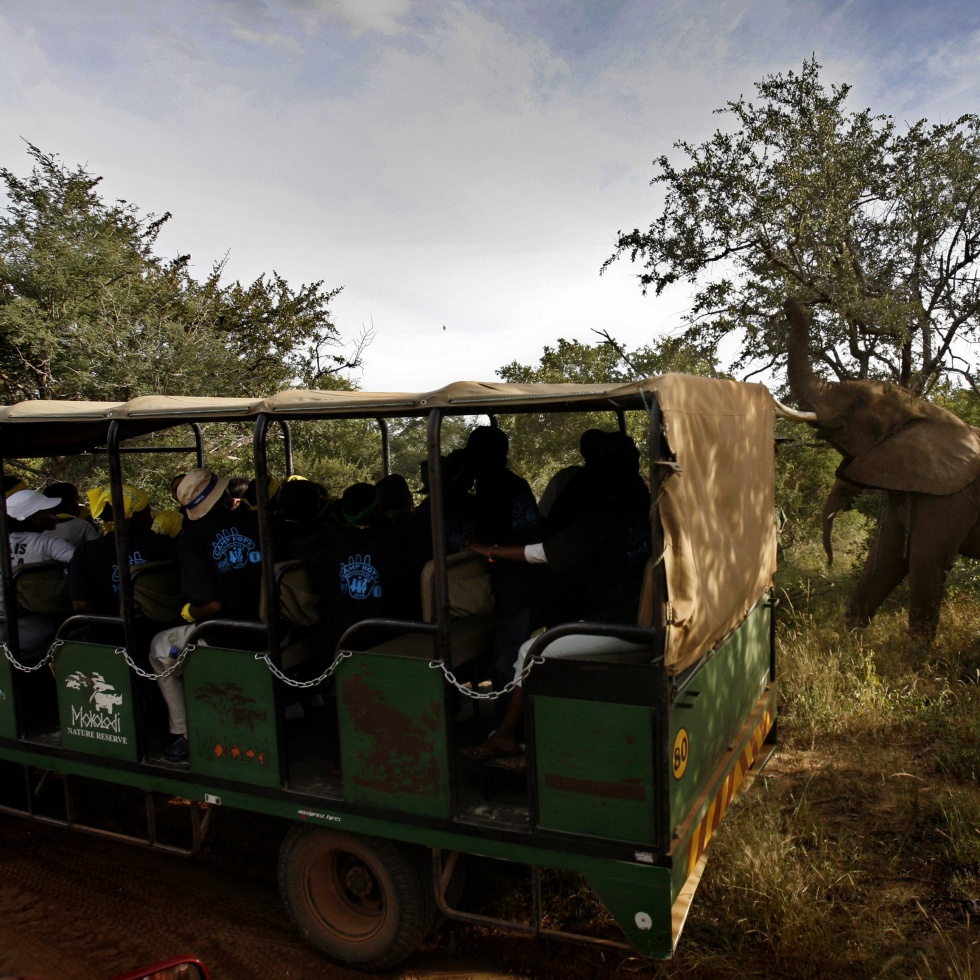
Early the next day we lined up to board a bus to take us on a safari at the Mokolodi Game Reserve. There the campers boarded game viewing vehicles with guides who helped answer all the campers’ questions as they viewed the wild animals. Not to be disappointed, we saw African elephants, whose ears look like a map of Africa, grazing impalas, waddling warthogs, leaf nibbling giraffes, a tired cheetah, highly plumed ostriches, and an awesome assortment of birds.

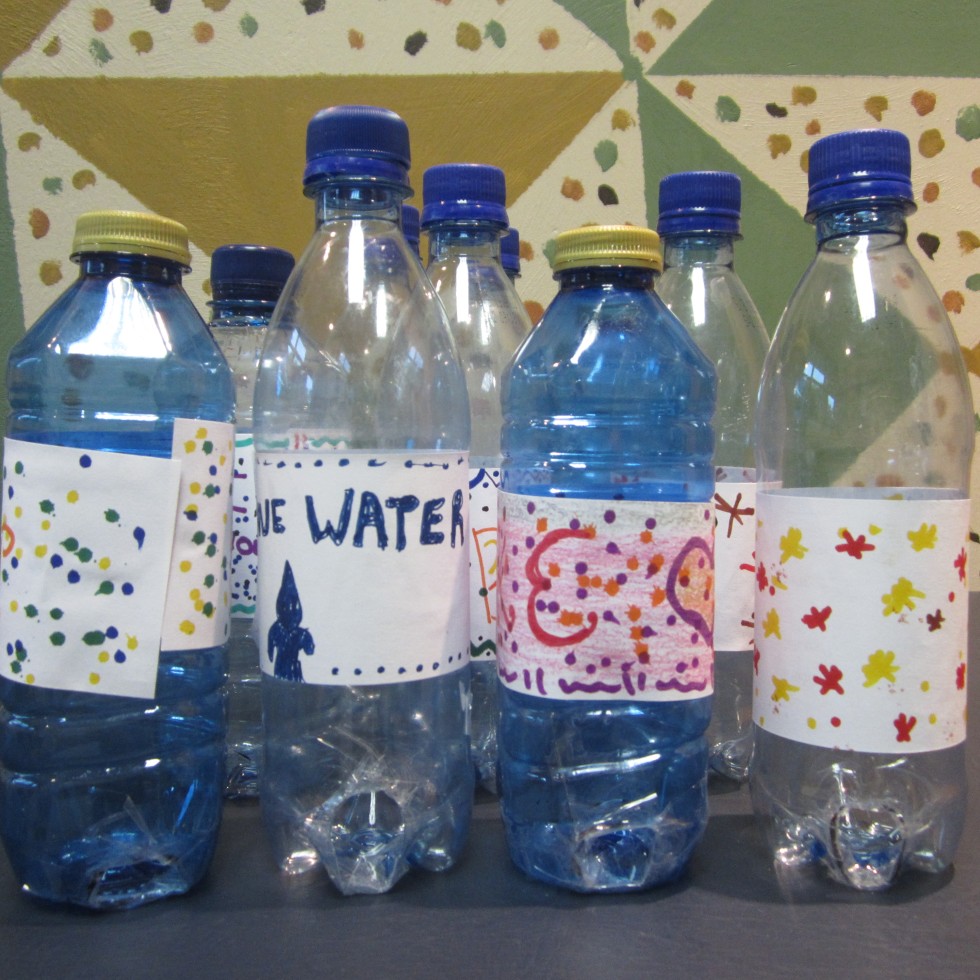
Later in the day we moved on to arts and crafts where we were all given a stuffed doll to decorate. We had yarn, fabric, buttons, glue, sparkles, beads, and paint. We were all busy cutting, pasting, drawing and decorating our own beautiful dolls. Girls and boys both enjoyed this activity. The products of their creative efforts, called Hope Dolls, were magical and something the campers looked forward to taking home.

That afternoon was filled with sports. We played netball (a version of basketball without a backboard), soccer and tennis. We played till we dropped. The fields and courts were immense, green and well maintained. What a pleasure! My secondary school in Molepolole would have loved to practice on any one of these courts.

In the evening we filed into an AV room clutching a cup of marshmallows and potato chips to see Chicken Run, a delightful clay animation film consisting of talking chickens and other creative characters. The bad guys tried to kill the chickens and the good ones helped them escape – in a flying machine, no less! Although one camper fell asleep on my lap, we all cheered as the chickens literally flew the coop to safety – far away from the chicken pie factory.

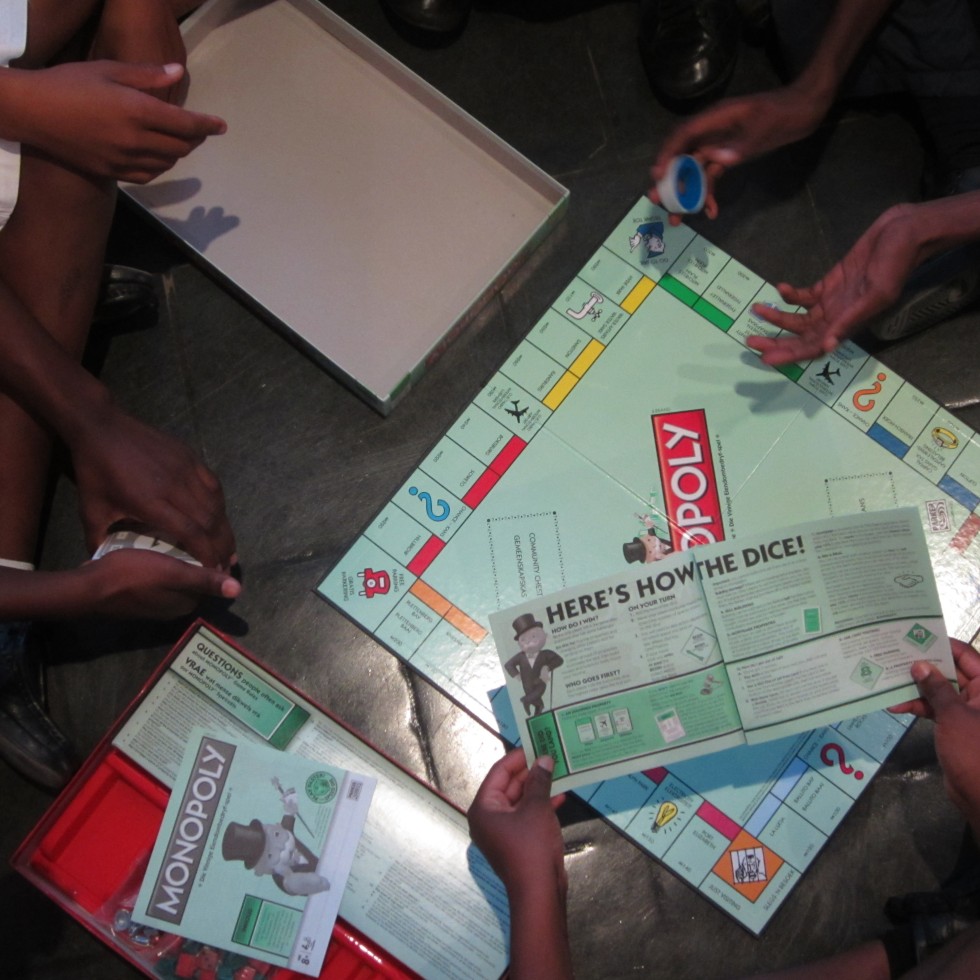
Other events on the following days included “feelings and emotions” with Bakani Johnson, an excellent social worker who helped us draw, talk and discuss our feelings in a very safe and comforting environment. We also learned about “character development”, including the qualities of trust, caring, respect and responsibility, with everyone participating in the discussion. And finally we had a choice of board games, twister (using two legs and two arms in amazingly different locations simultaneously), block-building and, my favorite, a huge puzzle of dinosaurs that a group of us worked on together.

One evening we had a talent show. I admit that my expectations were low; my group was young, shy and seemed rather passive. However, there was a DJ playing energetic music and the Teen Counselors cheered the campers on as each group performed either individually or together. My group did a short hip-hop routine complete with a gangster walk and waving yellow scarves in a line. After that we had karaoke by both boys and girls singing their hearts out to a cheering audience. Their gestures were appropriate and sophisticated. The groups did amazing hip-hop routines; each of them incorporated some special move that brought the crowd to their feet time and time again. We shouted, clapped and made long rows of waves over and over again. By the end of the evening we were all dancing and moving to the rhythms. It was awesome!

Other memorable events were the Camp Hope Olympics complete with face painting, burlap bag races and relays with eggs on a spoon, basket ball shooting, and a hula-hoop toss. Teams cheered and the counselors enjoyed it so much they had their own version of the various races!

All these events were captured on video or in still shots which were then made into a PowerPoint photo collage for the parents and campers. They loved seeing themselves and others on the big screen! It was a wonderful, colorful conclusion to a fun-filled week and it made the parting all the harder. We all laughed, learned about ourselves both physically and psychologically, played, danced, sang, ran and ate. Leaving was a drastic separation often leading to tears but filled with the prospect of returning to Camp Hope next year.

In closing I would like to commend the Baylor-Baylor COE and all their partners, including Barclays, UNICEF, Maruapula School, Seabelo’s Express and Mokolodi Game Reserve, on putting together this very successful event that not only helped build the campers’ self-esteem but increased their life skills in a fun and entertaining way. This is said out of admiration. I have been a Peace Corps Volunteer in Botswana for over a year. In Botswana, as well as at home in the US, I have put together smaller kinds of events and realize the challenges involved in coordinating such activities. While serving in Botswana I have been to many Teen Club events as a volunteer. I have enjoyed the well-crafted activities both as a participant and leader. But more importantly I have always learned new strategies and approaches for my work both inside and outside of the public schools. The Botswana-Baylor COE is having an impact on not only its patients, but is also building capacity throughout Botswana by teaching life skills strategies indirectly to families, friends and all the local and international volunteers. Ed Pettitt and his team of Baylor doctors, nurses, social workers, and supportive staff deserve credit for having gone above and beyond their normal duties to devote their time and expertise to this very worthwhile project.  Bravo!  A job well done!


Camp Hope 2009: The Challenge and Promise of ARVs

August 21, 2009

*For more information about our 2009-2010 Fundraising Drive, please visit our Donations page.*

The following post is courtesy of Dr. Leah Scherzer, one of the on-call doctors at Camp Hope 2009: 

A group of boy campers from the orange group at Camp Hope.  Photo courtesy of Kim Mehta.
A group of boy campers from the orange group at Camp Hope. Photo courtesy of Kim Mehta.

 Camp Hope 2009: The Challenge and Promise of ARVs

Camp Hope is a camp for children who are seen at the Botswana-Baylor Children’s Clinical Centre of Excellence (which means that they all have HIV).  Fifty children were chosen for the camp. Those chosen were those who are having problems with adherence (ie missing lots of doses of their meds), those who have particularly difficult social situations (ie lack of support, orphaned, etc), those having problems dealing with the stigma associated with HIV, and some children who just really wanted to come. They ranged in age from 9-12 and were mostly from the area surrounding Gaborone, though some traveled much further for the chance to come. For many it was their first time away from home and the first time they were able to be carefree children. The camp was held at a local boarding school, called Maruapula.

The medication sorting table
Dr. Joel (a Pediatrican from Botswana who works at the COE),
Me, Bri, Julia (both are fellow PAC docs),
Kia, with her back to the camera, is a visiting med/peds intern from the states

The children arrived on Sunday and the first major task was collecting and sorting all of their meds so that we could properly dispense them throughout the camp. This was not an easy task, as most of the children are on at least three separate medications which mostly have to be taken morning and night.

Here I am hard at work sorting meds into AM and PM doses

The medication sorting process made us all realize just how much of a burden these medications are. Some have to be taken with food, others on an empty stomach, some need refrigeration, and they all have to be taken around the same time each day. Most importantly one can really not afford to miss any doses. For other illness (like high blood pressure for example), taking around 80% of one’s medication is relatively good and a patient will likely have decent outcomes. However, for HIV, studies have shown that resistance to the medication can develop when people miss more than 2 doses out of 60 doses in the month (aka less than 95% adherence)! And mostly we are not talking about one pill a day. Most patients have to take around 6 or more pills in a day! There is good news though, as many newer combination pills are becoming available. There is now one pill (combining three drugs in one) that can be taken once a day. However, only certain patients can take this medication, and though it has just recently become available in Botswana, it is not available in most of the rest of Sub-Saharan Africa. So on the left is a daily dose of medications for one of the children at camp. If you look closely you will see the pills in the bags and notice that many of them are quite large.

Enough about the medications, camp was really about having fun! I wish I could post pictures of the campers having a truly great time, but we were not allowed to take any pictures of campers in order to protect their privacy. Many of them have not disclosed their status to anyone, including some family members. As a result, no pictures were allowed except for the designated photographer who took pictures only of those children whose parents had signed photo consent for photos to be taken and used only for official purposes. But take my word for it, the campers had an amazing time! They danced, sang, played sports, had cooking classes, did art projects, and even got to go on a game drive. We even made smores (though they don’t have graham crackers here, so we made them on “biscuits” aka cookies). It was so amazing to see them all laughing and playing and just getting to be children. At the end of camp there was a slide show for the parents and a few of the children spoke. One said that many of the children had come to camp with low self esteem and now it was high. One said that she was so sad to “graduate” from camp because she had made so many great friends and wished she could just stay at camp. It was truly moving to watch the children this week and to realize that without Anti-RetroViral medications (aka ARVs, or HIV drugs) these children would not be alive. However, with the medications (though burdensome), you would never know that they had HIV.


Camp Hope 2009: A Doctor’s Perspective

August 19, 2009

*For more information about our 2009 Fundraising Drive, please visit our Donations page.*

The following post is courtesy of Dr. Julia Rosebush, one of the on-call doctors at Camp Hope 2009:

A couple of girl campers waiting for their next activity at Camp Hope.  Photo courtesy of Kim Mehta

A couple of girl campers waiting for their next activity at Camp Hope. Photo courtesy of Kim Mehta

Camp Hope 2009: A Doctor’s Perspective

My first week working at the Botswana-Baylor Children’s Clincal Centre of Excellence (COE) was extremely intense albeit one of the most rewarding weeks I’ve had as a doctor thus far. Every morning at 7:00am our day begins with our patients, their families, and the COE staff singing gospel hymns, first in English, then in Setswana. It is easy to forget, if just for a moment, that these are nurses, pharmacists, secretaries, doctors, and directors making some of the most beautiful accapella music I have ever heard. If you close your eyes, if even for a moment, you will forget that you are at the Centre and that all of the children and their families surrounding you are struggling with the burden of HIV/AIDS. We aren’t allowed to photograph our patients, but if I could, these words would be unnecessary because the photos would say it all. They are infants, school-aged children, teenagers, and young adults. They are oftentimes severely malnourished, shy and unable to communicate their thoughts and feelings. Many of them have not been fully disclosed to regarding their HIV status. We teach this gradual process by describing the CD4 cells as “soldiers” and HIV as the “bad guy.” We tell the children that in order for their soldiers to put the bad guys to sleep, they need to take their medicines. Some of these children are in their early teenage years by the time they achieve full disclosure. Many suffer from developmental delay and are struggling with school performance because of a multitude of psychosocial situations and neurocognitive side-effects from the medications and the virus itself. I’m studying WHO protocols, guidelines, algorithms… and I’m encouraged to construct some of my very own based upon what I encounter each day at the Centre. I’m participating in a clinical trial, learning about multi-drug-resistant TB, and I’m learning Setswana so that I can better relate to my patients. I’m told that when the guidelines say, “Consult an infectious disease expert,” that we’re to discuss these issues with our colleagues… we are the experts. But if only we were required to just know about HIV…

This week Raheel and I participated in Camp Hope, a Baylor-sponsored event for HIV-positive preteens as a way to build confidence, self-esteem, friendships, and to learn life skills. Early last Sunday morning we braved the bitter cold and registered 50 youths between the ages of 9 and 13 outside Maruapula Secondary School struggling with medication adherence, being ostracized at school, and dealing with poverty, malnutrition, and broken homes. They came from villages, nearby towns, and from Gaborone itself. They are what the Centre refers to as their “challenge” population, kids who have failed their first line therapy, kids who rely on social workers just to make it through the week, and kids with behavioral disorders resulting from HIV and lack of supervision in the home. With plastic bags full of antiretroviral (ARV) medication they lined up one-by-one offering them to me so that I could prepare them for their twice daily routine of directly observed therapy. Red. Yellow. Green. Blue. Purple. Orange. Black. Raheel handed each of them a bandana signifying the group with which they would eat, sleep, and bond with over the next 5 days. For most of them, this was their first time away from home and for many of them, it was their first time receiving their medicines on a routine basis with supervision. For some, this was their first time meeting other children who took medicines just as they did. What surprised me the most was that many of the campers did not know their HIV status… and what’s more amazing, is that it might be several years before they find out. You see, Camp Hope is a place of refuge, a place for kids to go where they are accepted for who they are. The activities that they participate in don’t relate in any way to HIV, instead, they focus on things such as performing arts, feelings and emotions, character building, cooking, sports, and arts & crafts… things that kids like to do.

Throughout the week of Camp Hope, Raheel and I witnessed an amazing transformation. Little by little these shy and awkward preteens came crawling out of their shells. They became leaders, friends, dancers, actors, and emotional support systems for each other. They took part in a talent show, singing solo and showing off their amazingly graceful bodies through dance routines. They were smiling and more energetic than they had probably ever been. One child mentioned that he was so “thankful for the food” because Camp Hope gave him the opportunity to eat things he had never eaten before. A group of 10-year-old girls picked up their tortillas one night at dinner and looked at them quizzically. They giggled when I told them that it was called a “tortilla” and that they needed to wrap their chicken in it. They thought it looked like a pizza and that it tasted like nothing. As the on-call doctor for a 24-hour period, I was able to participate in a hip-hop dance class with the kids and help organize a donor tea for local businesses and corporations to learn more about Baylor’s work with the adolescent population in Botswana, the first African country to see their HIV-positive children turn into young adults with the help of ARVs. After graduation from Camp Hope, the teens are ready to join Teen Club which occurs in various towns and villages throughout the country on Saturdays. My first one will be the 29th of August and I was already forewarned to expect over 100 teens and some pretty crazy times. I can’t wait. These kids are already keeping me young.